
Summary: Wondering what memory care is and how it differs from traditional senior living? This comprehensive guide outlines the purpose, specialized services, daily programs, and security features of dedicated memory care communities. Readers will discover how tailored support, secure environments, and compassionate care help seniors with Alzheimer’s or dementia live with dignity and peace of mind.
- Memory care defined: Specialized long-term care designed exclusively for individuals with Alzheimer’s disease, dementia, or memory loss.
- Core services provided: 24/7 staff supervision, medication management, personal care assistance, and structured daily routines.
- Key differences from assisted living: Enhanced security features, lower staff-to-resident ratios, and specialized cognitive programming.
- Enriching programs: Purposeful programs including music therapy, sensory stimulation, gentle exercise, and memory-focused games.
- Choosing a community: Essential factors for families, including safety protocols, staff training, and individual care planning.
Navigating a memory loss diagnosis can feel overwhelming for any family. As cognitive changes progress, daily routines that were once simple become increasingly complex and unsafe.
If you are researching care options for a loved one, you have likely encountered the term and wondered: what is memory care, and how does it provide the specialized support your family needs?
A clear memory care definition goes beyond standard housing. When you define memory care, it refers to a distinct form of long-term residential care specifically designed to meet the unique physical, cognitive, and emotional needs of seniors experiencing memory loss.
Understanding memory care, what it is, and how it functions empowers families to make confident, compassionate decisions for their loved ones.
Who Typically Needs Memory Care?
Memory care is designed for seniors diagnosed with Alzheimer’s disease, vascular dementia, Lewy body dementia, or other progressive cognitive impairments.
In early stages, individuals might manage at home with family support. However, as conditions advance, individuals often experience disorientation, wandering, personality shifts, or difficulty completing basic tasks independently.
When home safety becomes a constant concern or family caregiving leads to severe burnout, transitioning to a dedicated memory care community provides a secure, structured environment where seniors receive round-the-clock professional attention tailored to their exact stage of cognitive decline.
What Does Memory Care Consist Of?
If you are asking what does memory care consist of, the answer centers on specialized support, intentional design, and constant safety. Unlike traditional care settings, memory care environments are built from the ground up to minimize confusion and foster calm.
To help illustrate how these specialized services support residents daily, memory care communities center their core offerings around several vital pillars:
- 24/7 supervision and secured safety: Controlled access, enclosed courtyard spaces, and secure perimeter tracking systems prevent unsafe wandering while allowing residents to move freely within a safe sanctuary.
- Specialized daily assistance: Compassionate care partners assist with personal hygiene, bathing, dressing, and dining, using gentle guidance, verbal cueing, and redirection techniques.
- Health and medication management: Trained team members support medication management and monitor residents’ well-being.
How Is Memory Care Different from Assisted Living?
While both options provide housing and assistance with daily tasks, the primary difference lies in the level of cognitive specialization, security, and staff training.
Assisted living is ideal for seniors who need help with physical tasks, such as light housekeeping, meals, or mobility, but who retain high cognitive independence and can navigate open surroundings safely.
Memory care, by contrast, features secured building layouts to protect residents who experience spatial confusion or wandering tendencies.
Staff members in memory care undergo intensive, specialized dementia training to handle behavioral changes, communication challenges, and sundowning with patience and expertise. Additionally, memory care communities maintain lower staff-to-resident ratios to deliver more frequent, one-on-one attention throughout the day.
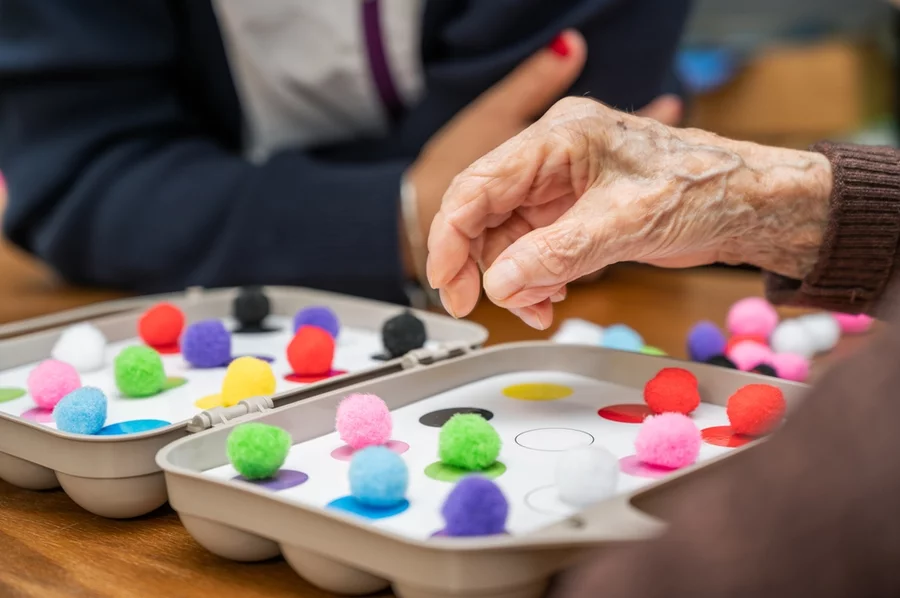
Purposeful Programs Offered in Memory Care Communities
Daily life in memory care centers on structured, predictable routines that reduce anxiety and promote joy. Rather than passive entertainment, programs are purposefully crafted to stimulate memory, maintain motor skills, and spark social connection.
Residents engage in evidence-based cognitive programs, such as therapeutic music sessions, art projects, guided sensory gardens, and gentle chair exercises.
Reminiscence therapy helps residents access deep-seated memories and express themselves. Group dining and social gatherings ensure that residents feel valued and connected within a warm, community environment.
How Families Choose the Right Memory Care Community
Selecting the ideal community for a loved one involves evaluating safety features, care philosophies, and overall atmosphere. Families should visit potential communities in person to observe how staff interact with residents during daily programs.
Look for a warm, home-like environment with clear signage, secure outdoor walking paths, and well-maintained private rooms. Ask detailed questions about staff training programs, emergency response protocols, staff-to-resident ratios, and how personalized care plans are updated over time.
It is also beneficial to inquire about family communication practices, ensuring you stay closely informed about your loved one’s health and daily moments of joy.
Discover Compassionate Memory Care at Palm Vista Senior Living
Finding the right support for a family member with memory loss brings tremendous relief and peace of mind. If you are exploring care options in Palmdale, California, discover dedicated Memory Care at Palm Vista Senior Living.
Our community combines secure, comfortable surroundings with specialized wellness programs, holistic music therapy, and deeply compassionate staff dedicated to honoring every resident’s dignity.
Schedule a tour today. Connect with our knowledgeable team to tour our memory care neighborhood and learn how we can support your family’s journey.